
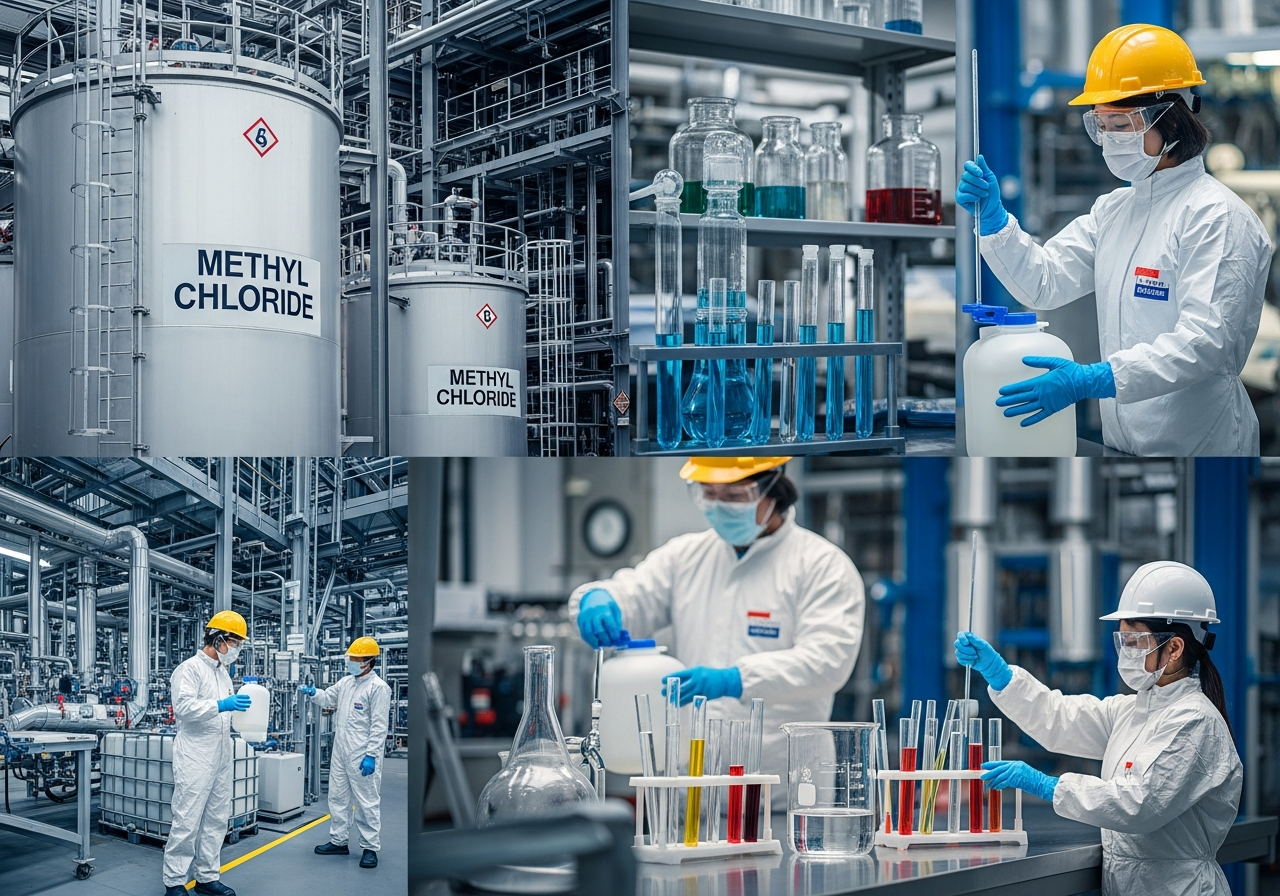
Methyl chloride, also known as monochloromethane, is a colorless, flammable gas at room temperature that plays a vital role in chemical manufacturing. Its unique properties make it a versatile chemical used in silicone production, pharmaceutical intermediates, and other industrial applications. Understanding its applications, handling requirements, and safety considerations is essential for industrial professionals.
Understanding Methyl Chloride
Methyl chloride (CH₃Cl) is a volatile organic compound with low boiling point and high reactivity. It is primarily produced through the chlorination of methanol under controlled industrial conditions. Key characteristics include:
-
Colorless, flammable gas
-
Slightly sweet odor
-
Soluble in organic solvents and slightly soluble in water
-
High chemical reactivity, especially with metals and bases
Due to these properties, methyl chloride is commonly used as a chemical intermediate rather than a final product.
Industrial Applications of Methyl Chloride
Silicone Production
One of the largest applications of methyl chloride is in the manufacture of silicone polymers. Methyl chloride reacts with silicon-containing compounds to form methylchlorosilanes, which are then hydrolyzed to produce silicones. These silicones are used in:
-
Sealants and adhesives
-
Lubricants and greases
-
Medical devices and coatings
-
Electrical insulation
Pharmaceutical Intermediates
Methyl chloride is also utilized as a methylating agent in pharmaceutical and fine chemical production. It is used in the synthesis of compounds that require controlled methylation, supporting production of medicines and specialty chemicals.
Other Chemical Intermediates
Monochloromethane is a key raw material in the production of:
-
Polymers and resins
-
Pesticides and fumigants
-
Specialty solvents and chlorinated compounds
Its versatility makes it an essential building block for various industrial chemical reactions.
Handling and Safety Considerations
Due to its flammability and toxicity, methyl chloride must be handled with strict safety precautions:
-
Ventilation: Work in well-ventilated areas or use closed systems to minimize inhalation exposure.
-
Personal Protective Equipment (PPE): Gloves, goggles, and chemical-resistant clothing are mandatory.
-
Storage: Store in tightly sealed containers away from heat sources, sparks, or open flames.
-
Monitoring: Use gas detectors and continuous monitoring in areas where methyl chloride is handled.
-
Emergency Response: Ensure fire suppression equipment and spill containment measures are readily available.
Following these guidelines ensures safe handling and minimizes health risks for workers.
Regulatory Compliance
Methyl chloride is regulated in many countries due to its potential health and environmental hazards. Compliance includes:
-
Adhering to occupational exposure limits (OELs)
-
Implementing proper labeling and safety documentation (MSDS/COA)
-
Following environmental guidelines for emissions and disposal
Awareness of these regulations is critical to avoid legal and safety issues in industrial operations.
Supply and Quality Considerations
Reliable supply of methyl chloride ensures uninterrupted production in chemical manufacturing. Key factors in sourcing include:
-
Consistent purity and chemical composition
-
Availability of bulk quantities for industrial-scale applications
-
Safe transport and storage logistics
-
Documentation for regulatory compliance
Quality assurance at every stage—from production to delivery—ensures optimal performance in downstream applications.
Emerging Trends and Innovations
Green Chemistry Approaches
Efforts are underway to produce methyl chloride and its derivatives using environmentally friendly processes, reducing emissions and improving energy efficiency.
Advanced Industrial Applications
Innovations in silicone and polymer technologies are expanding the use of methyl chloride in electronics, medical devices, and specialty coatings.
Safety Automation
Automation and remote monitoring in chemical plants enhance safety and minimize human exposure during handling of volatile chemicals like methyl chloride.
Conclusion
Methyl chloride (monochloromethane) is a versatile and essential chemical in industrial manufacturing, particularly in silicone production, pharmaceutical intermediates, and chemical synthesis. Its handling requires strict adherence to safety protocols and regulatory compliance to ensure worker protection and environmental safety. Proper sourcing, high-quality supply, and best practices in storage and handling are key to maximizing performance in industrial applications.